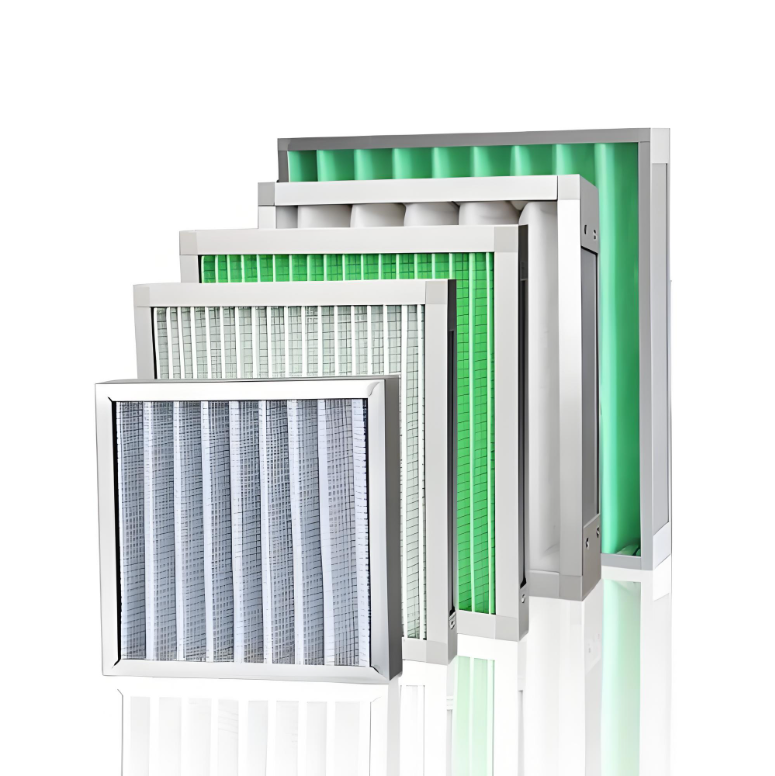
In the field of fresh air systems, there are two technologies: electrostatic dust removal or HEPA filter physical filtration. What are the advantages and disadvantages of each of these technologies?
Static dust removal has always used the marketing slogan of "saving consumables" or "no need to replace consumables" to attract consumers. This is because static dust removal does not require the replacement of filters, but it needs to be regularly cleaned and maintained. If in severe smoggy weather, it needs to be cleaned once every 1-2 weeks due to high-intensity continuous use. The cleaning frequency is high. Moreover, as the usage time increases, the dust removal effect will decrease. If used for a long time, it will cause secondary pollution. To ensure the effect, a coarse filter screen should be added at the front end of the static filtration system, and an activated carbon and medium filter screen should be added at the rear end to absorb carbon powder and ozone. These consumables are not all without replacement, and the overall cost will be higher.
Furthermore, although the electrostatic dust collection mode seems to have a relatively low actual cost of consumables, it has the drawback of being difficult to maintain and clean. The dust collection device is of a tank structure. After being carbonized by high pressure, the particles adhere to it and become relatively stubborn. They need to be wiped forcefully, and sometimes auxiliary cleaning agents are required. It is very difficult to reach the inner part without a brush.
Generally speaking, electrostatic dust removal is used for industrial purification. However, due to the fixed cost of the electrostatic system and the high cost of making small equipment, it is not cost-effective. Moreover, its large air volume characteristic makes it difficult to fully utilize its effectiveness in a small space, resulting in poor results. In a small space, the high concentration of ozone is more likely to cause harm to the human body!
In 2007, the government of California in the United States officially banned the sale of air purifiers that have ozone-creating functions and electrostatic dust collectors. This was because electrostatic dust removal inevitably generates ozone during operation, and ozone is harmful to human health!
The HEPA filter physical filtration technology involves introducing outdoor air into the indoor space through the ventilation system. It employs a three-level air filtration process consisting of primary, medium, and high efficiency (HEPA at levels H11 and H13) to thoroughly filter out PM2.5 from the air. This is a purely physical filtration method that does not produce ozone and does not cause secondary pollution. Through filtration, fresh air is ensured to enter the indoor space, replenishing the oxygen content in the air, reducing the concentrations of carbon dioxide and formaldehyde. At the same time, it also expels indoor dirty air, such as bacteria, mold, viruses, and odors.
In addition, it can also reduce the energy consumption of air conditioners. The air discharged undergoes a heat and cold exchange with the fresh air, and over 80% of the energy can be recovered, resulting in a 25% reduction in electricity costs during the air conditioning season.
As people have become more aware of the dangers of air pollution, the installation of ventilation systems has become very common. From ordinary residential houses to schools, kindergartens, offices and other social venues, one should also have some understanding of the various technical performances of ventilation systems in order to truly select a suitable and effective ventilation system for oneself.